2plant (NVS-knot)
Two weeks of daily planting windows per 100 m of field: is there enough moisture to germinate, and is the ground safe for machinery?
The source shelf
Original resources from the indexed projects, collected in one place. Follow a demo back to its project analysis before applying the lesson.
Original uploads open on YouTube or Google Drive. Availability and access rules can change; players load only after you follow the link.
Two weeks of daily planting windows per 100 m of field: is there enough moisture to germinate, and is the ground safe for machinery?
 ▶ Watch original ↗
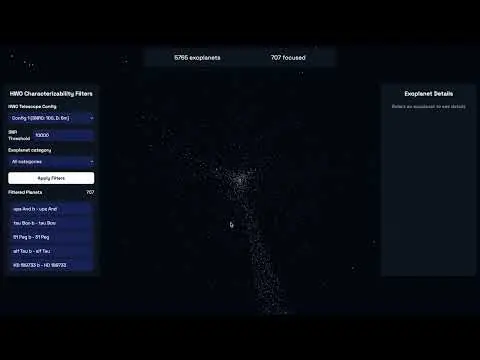
A 3D map of known exoplanets scored for habitability and detectability, to help the Habitable Worlds Observatory pick targets.
 ▶ Watch original ↗
Walk a 3D virtual museum where each painting opens a live NASA data visualization of how Earth's systems connect.
A three-level city-building game that teaches sustainability, ending with urban-planning decisions made on real NASA Earth data.
 ▶ Watch original ↗
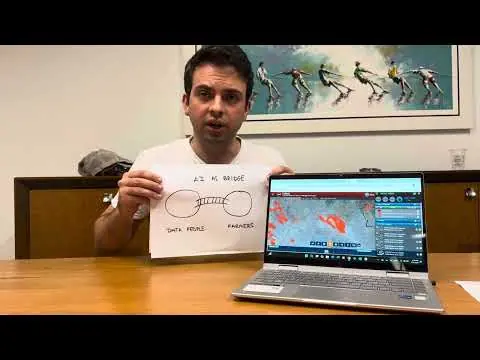
Ask a voice agent about wildfires near you in plain language; it queries NASA FIRMS and weather data and moves the map for you.
 ▶ Watch original ↗
Pin a spot, get told before Landsat flies over, then compare your ground measurement with the 3×3 pixel it captured.
 ▶ Watch original ↗
A U-Net deep network on decomposed seismic energy that finds the onset of moonquakes and marsquakes in noisy lander data.
 ▶ Watch original ↗
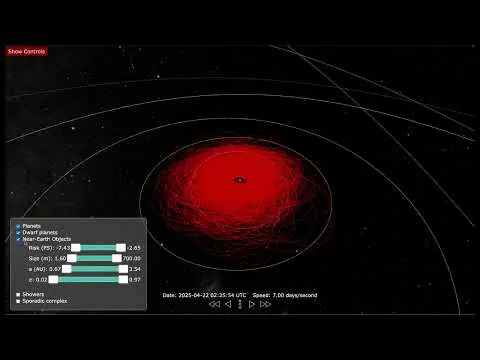
A physically based 3D orrery that puts near-Earth objects and meteoroid streams in one view to show the overlooked hazard to satellites.
Mother Earth meets her children North, South and Neutral every five years to compare climate notes — then you play, and see the forecast if nothing changes.
 ▶ Watch original ↗
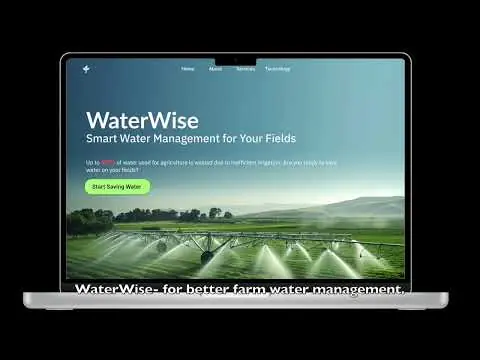
Map your field, enter the crop and irrigation system, and get a 7-day watering schedule computed from NASA-backed evapotranspiration data.
Orbital debris compliance and risk intelligence: automated Debris Assessment Software runs, ready-to-file disposal reports and a risk index for every object.
Optimization model that decides when and where orbital data centers beat terrestrial ones for AI and Earth-observation compute.
 ▶ Watch original ↗
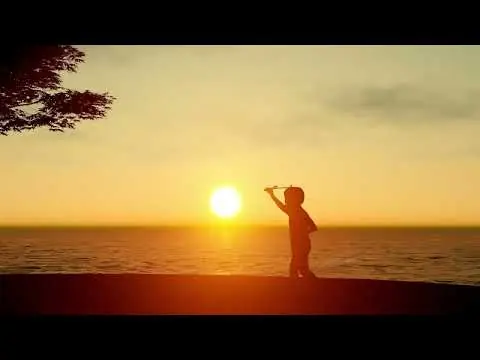
A digital children's story narrated by the Sun that explains how space weather touches daily life, with science sourced from NASA and NOAA.
 ▶ Watch original ↗
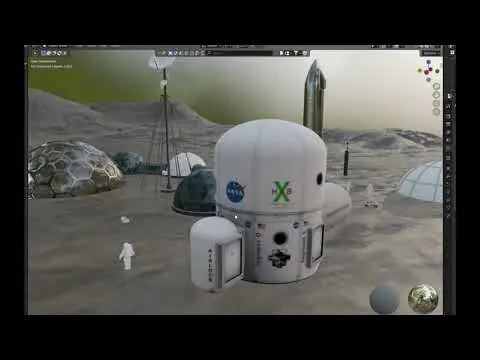
A habitat layout tool that doubles as a survival simulator: model in 3D, compute crew needs live, and test the design against real solar-storm alerts.
 ▶ Watch original ↗
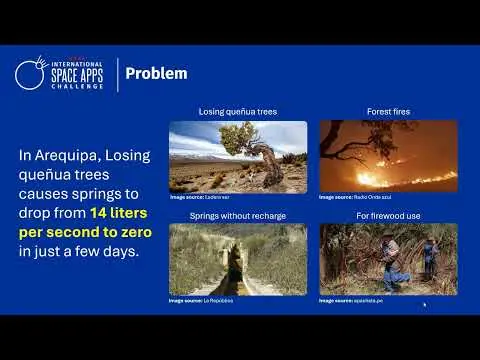
Smart reforestation of Arequipa's queñua forests against water scarcity, combining NASA vegetation indices, drone mapping, AI and native microorganisms.
 ▶ Watch original ↗
End-to-end pipeline that finds exoplanets in Kepler, TESS and JWST data and checks possible biosignatures against false positives.
Ultra-local, personalized weather risk from NASA Earth observation data, with the safest time window for your activity.
Interactive dashboard showing how radiation and microgravity together affect astronaut health at the molecular level.
A story-driven farming game: travel with Henry to farmers facing floods, heat, drought and salty soil, and solve each with real NASA satellite data.
Team-published destinations, not a guarantee that a demo still works. Some point to presentation files.
Autonomous agent that watches Colombian public procurement and issues opportunities and red flags with cited evidence.
Two weeks of daily planting windows per 100 m of field: is there enough moisture to germinate, and is the ground safe for machinery?
A 3D map of known exoplanets scored for habitability and detectability, to help the Habitable Worlds Observatory pick targets.
Walk a 3D virtual museum where each painting opens a live NASA data visualization of how Earth's systems connect.
A three-level city-building game that teaches sustainability, ending with urban-planning decisions made on real NASA Earth data.
A physically based 3D orrery that puts near-Earth objects and meteoroid streams in one view to show the overlooked hazard to satellites.
Mother Earth meets her children North, South and Neutral every five years to compare climate notes — then you play, and see the forecast if nothing changes.
Map your field, enter the crop and irrigation system, and get a 7-day watering schedule computed from NASA-backed evapotranspiration data.
Orbital debris compliance and risk intelligence: automated Debris Assessment Software runs, ready-to-file disposal reports and a risk index for every object.
A digital children's story narrated by the Sun that explains how space weather touches daily life, with science sourced from NASA and NOAA.
A habitat layout tool that doubles as a survival simulator: model in 3D, compute crew needs live, and test the design against real solar-storm alerts.
Smart reforestation of Arequipa's queñua forests against water scarcity, combining NASA vegetation indices, drone mapping, AI and native microorganisms.
End-to-end pipeline that finds exoplanets in Kepler, TESS and JWST data and checks possible biosignatures against false positives.
Ultra-local, personalized weather risk from NASA Earth observation data, with the safest time window for your activity.
Interactive dashboard showing how radiation and microgravity together affect astronaut health at the molecular level.
A story-driven farming game: travel with Henry to farmers facing floods, heat, drought and salty soil, and solve each with real NASA satellite data.
Ask for help and coordinate rescues without internet, with remote visibility once the network returns.
Primary sources already cited in the corpus. Dates below are record retrieval dates, not new verification claims.
Compression, lazy loading, debouncing, pagination and measurement. Apply selectively: database advice does not apply to a static site.
Prioritize the main content image; do not delay it with lazy loading.
Defer offscreen images, reserve their dimensions, and let the browser schedule requests.