Projects / NASA International Space Apps Challenge 2025
Award winnerBest Use of ScienceConfidence: high
SpaceGenes+
Interactive dashboard showing how radiation and microgravity together affect astronaut health at the molecular level.
Project facts
- Track / challenge
- Build a Space Biology Knowledge Engine
- Team
- 1 person · DE
- Build
- software only
- AI
- None stated
Problem
Astronauts experience radiation and microgravity at the same time, but most space omics tools study each stressor in isolation, hiding interactions that matter for long-duration missions.
Solution
A web dashboard that ingests NASA GeneLab transcriptomic data (OSD-288, mouse spleen in spaceflight), computes synergy scores from fold changes across radiation-only, microgravity-only and combined conditions, and flags genes whose combined response exceeds the sum of the individual effects, for researchers, drug developers and mission planners.
Demo moment
Not described in the sources.
Why it stood out
- organizer statedWon the award for the best and most valid use of science and/or the scientific method.Source ↗
- organizer statedGives researchers and mission planners an easy way to identify important molecular changes for long-duration spaceflight protection.Source ↗
- team statedFlips the usual framing: existing tools treat spaceflight stressors separately, while the product looks for non-additive effects of combined stress.Source ↗
- team statedThe science is explicit and checkable: one named GeneLab dataset and a stated synergy rule (combined effect greater than the sum of single effects).Source ↗
- curator inferenceA one-person entry used no-code and AI-assisted tools for speed while keeping dataset choice and synergy logic explicit, so tool leverage did not cost validity.
Lessons for your next hackathon
- Narrow a broad challenge to the one question a named user (a mission planner) must answer.
- State the dataset and the rule behind every result; validity judges reward science they can check.
- No-code and AI tools are fine when the disclosure says exactly what each did.
Similar situations
Projects that share domains, mechanisms or judging lenses — often with a different problem and stack.Tune the comparison.
 ▶ Video
Award winner · 2024
A U-Net deep network on decomposed seismic energy that finds the onset of moonquakes and marsquakes in noisy lander data.
Shared: domains space science · lenses scientific validity, challenge relevance · stack python
 ▶ Video
Award winner · 2025
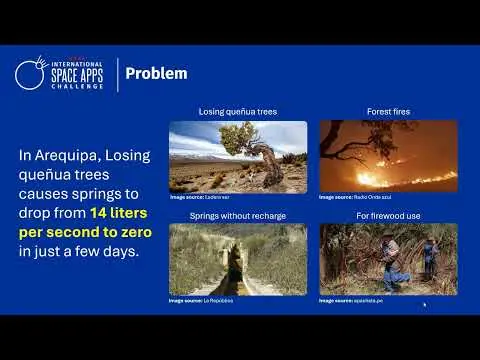
Smart reforestation of Arequipa's queñua forests against water scarcity, combining NASA vegetation indices, drone mapping, AI and native microorganisms.
Shared: mechanisms human stakes · lenses impact, challenge relevance, scientific validity
 ▶ Video
Award winner · 2024
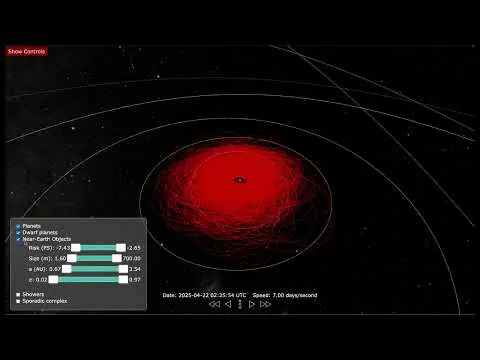
A physically based 3D orrery that puts near-Earth objects and meteoroid streams in one view to show the overlooked hazard to satellites.
Shared: domains space science · mechanisms inverted approach, expert data for everyone · lenses scientific validity
 ▶ Video
Award winner · 2025
End-to-end pipeline that finds exoplanets in Kepler, TESS and JWST data and checks possible biosignatures against false positives.
Shared: domains space science · lenses scientific validity · stack python
 ▶ Video
Award winner · 2024
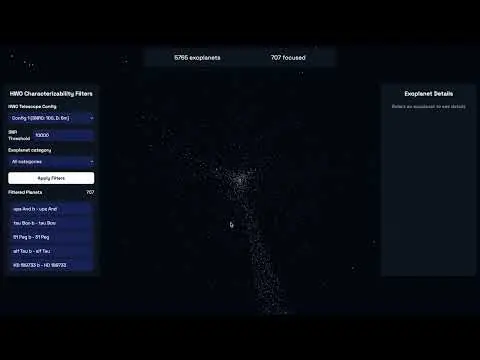
A 3D map of known exoplanets scored for habitability and detectability, to help the Habitable Worlds Observatory pick targets.
Shared: domains space science · lenses scientific validity
 ▶ Video
Award winner · 2024
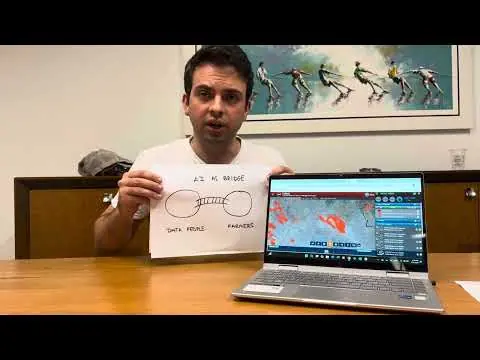
Ask a voice agent about wildfires near you in plain language; it queries NASA FIRMS and weather data and moves the map for you.
Shared: mechanisms human stakes, expert data for everyone · lenses impact, challenge relevance
Sources
- https://www.nasa.gov/learning-resources/stem-engagement-at-nasa/nasa-announces-2025-international-space-apps-challenge-global-winners/ · official results · retrieved 2026-09-14
- https://www.spaceappschallenge.org/2025/awards/ · official event page · retrieved 2026-09-14 — Award definition.
- https://www.spaceappschallenge.org/2025/find-a-team/spacegenes/?tab=project · project page · retrieved 2026-09-14 — Team-written summary, method, tools, AI-use disclosure and NASA data.